Microchips vs. ID Tags vs. Nose Print Recognition: Closing the Gaps in Pet Identification
“Is a microchip or an ID tag enough?”
A registered microchip and an ID tag can make it seem like a pet’s identification needs are covered. The pet has a registration record, and the tag gives people a way to contact the owner.
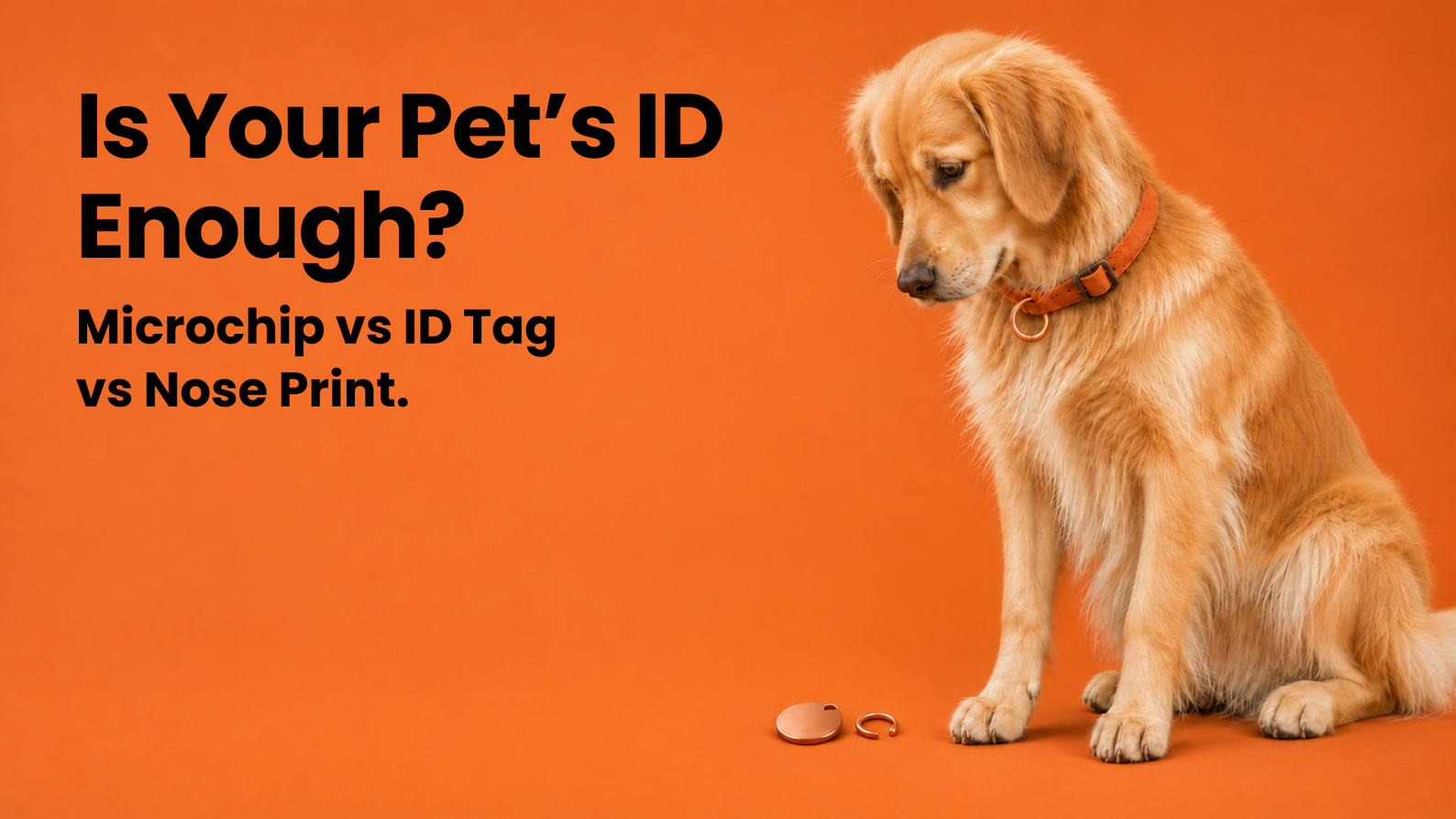
But a tag can fall off or become unreadable. The person who finds the dog may not have a microchip scanner. And even when the registration record is found, an outdated phone number can block contact.
Each method can help, but its usefulness depends on the situation. When comparing identification methods, consider who can use each one, where they can use it, and what they can do with the information.
What Does Each Identification Method Actually Tell You?
Each method provides a different kind of information.
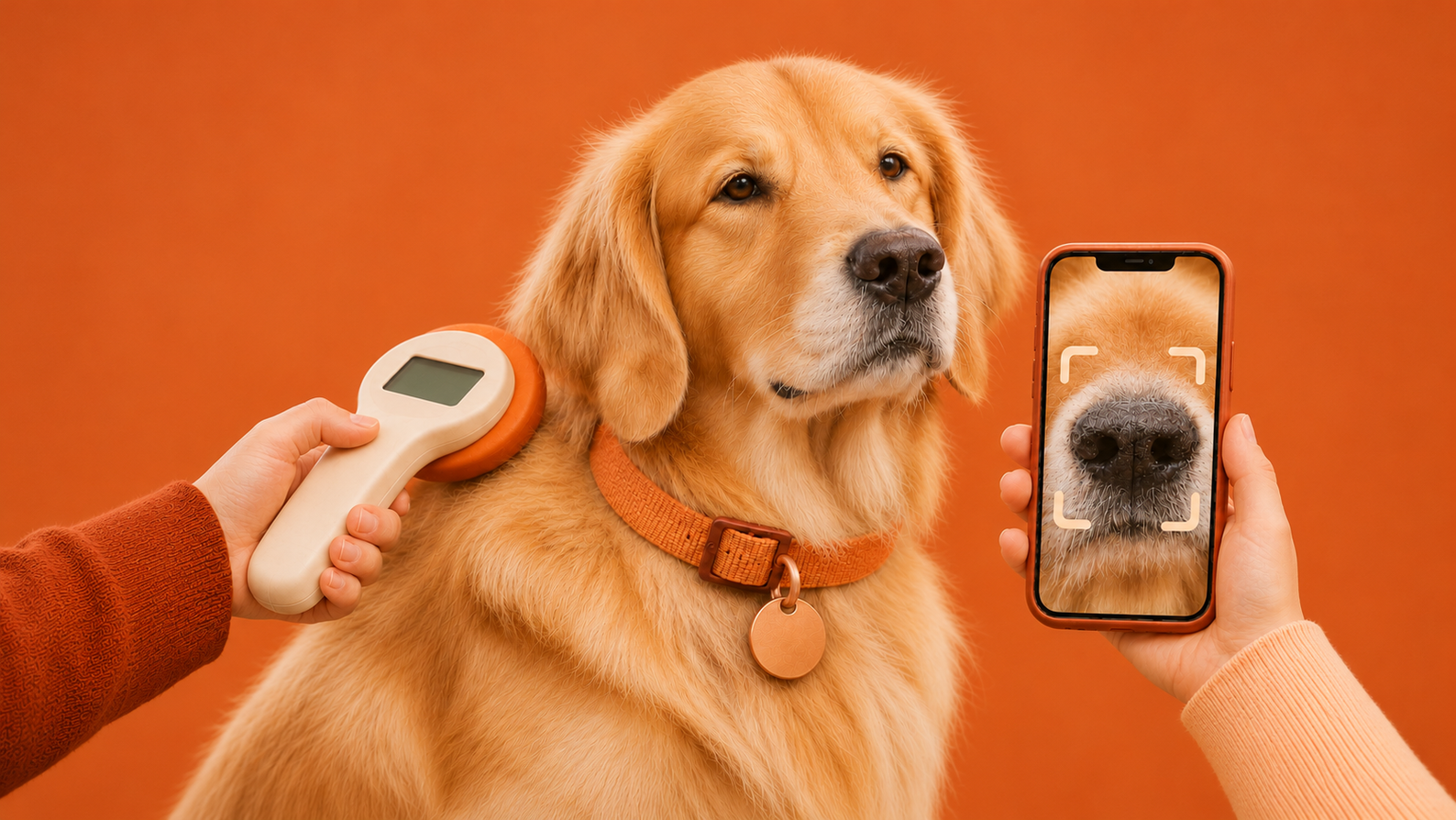
A microchip provides an ID number for looking up registration records. An ID tag displays contact details or links to a profile. Nose print recognition compares the patterns on a dog’s nose with stored biometric records to verify a match or find possible matches.
Here, “microchip” means an implanted chip. “ID tag” means a tag displaying contact details or a QR code.
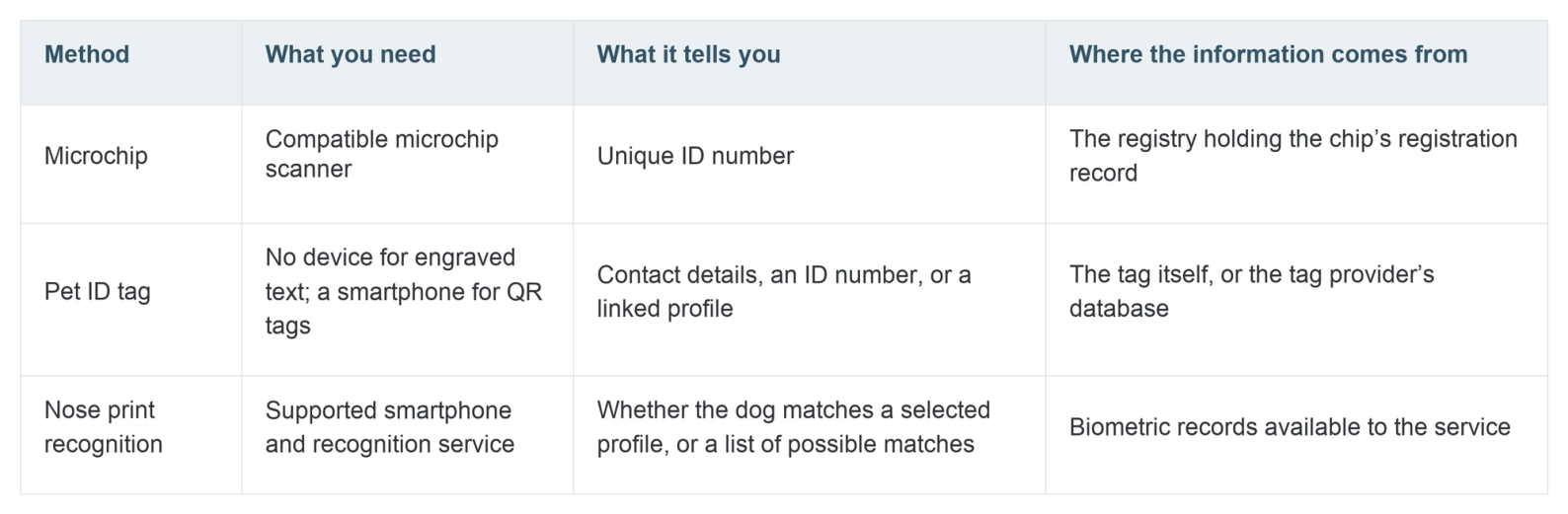
A microchip typically stores an ID number. The owner’s contact details are held in a registry, so scanning the chip is followed by a record lookup. (AAHA)
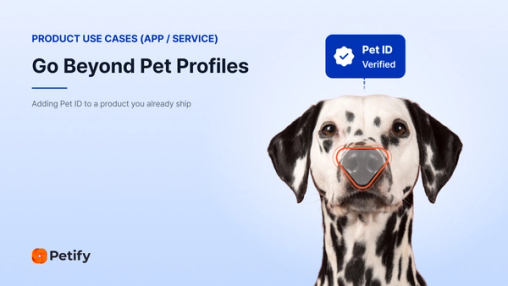
Nose print recognition offers a way to check a dog’s identity using a smartphone, without a dedicated microchip scanner. If the dog’s nose print is already registered in a supported service, the service can help verify the dog at check-in or search its database for a match to a found dog. (Petnow)
There is also an international standard for these services. ITU-T X.1095, approved in November 2023, covers identity verification services using nose patterns and faces of dogs and cats. It addresses biometric data collection, platform design, and performance testing.
For service teams, it provides a reference when assessing how a provider collects biometric data and tests recognition performance. Individual product performance still needs to be evaluated.
Why the Right Tool Depends on Who’s Using It
The most useful method depends on what the person needs to accomplish.
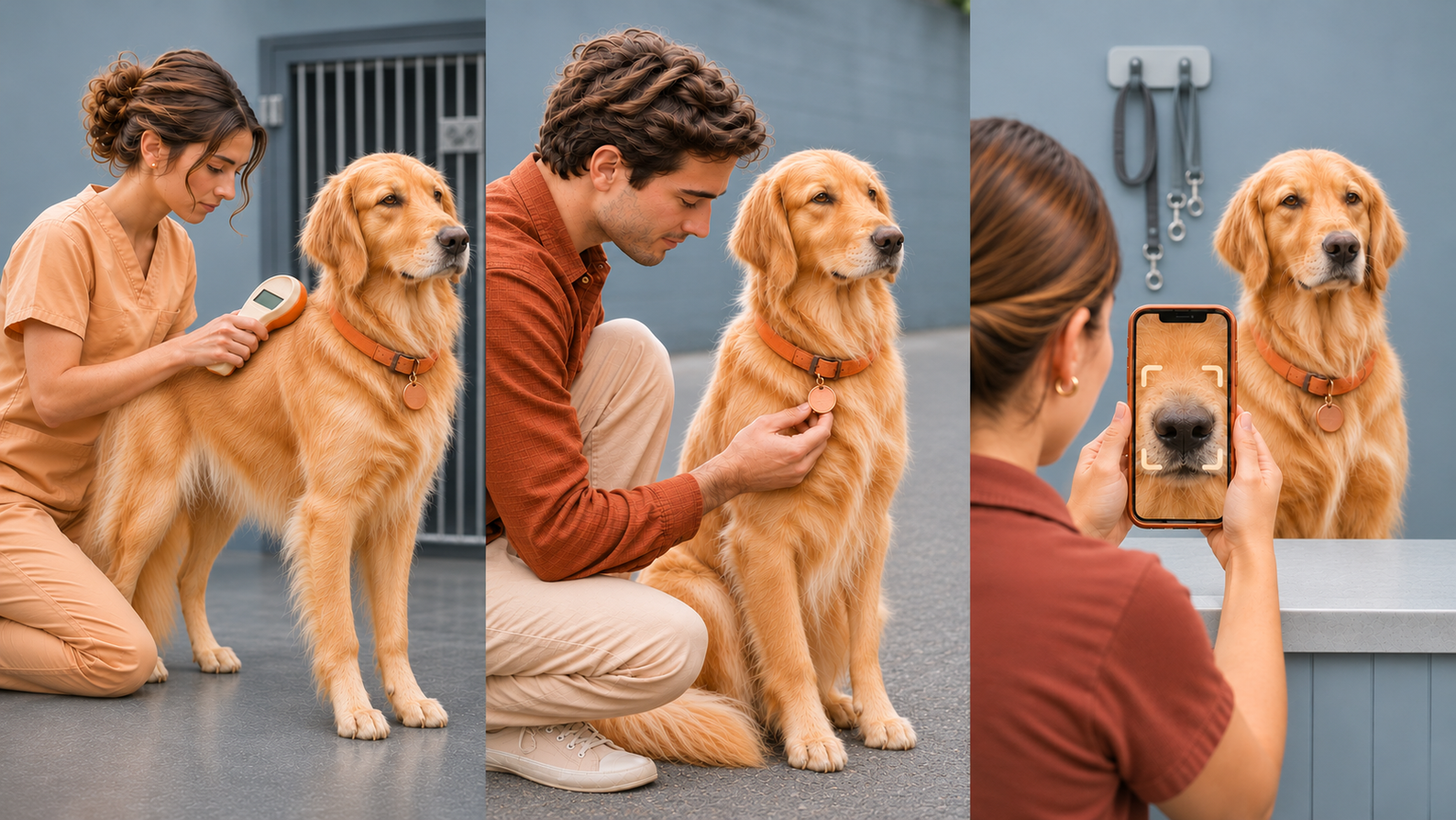
Someone who finds a dog needs to reach the owner. A readable tag with current contact details can make that a simple phone call.
Veterinary clinics and animal shelters may need to retrieve registration records. With a compatible scanner, staff can read an implanted chip even when a tag is missing, then look up the relevant registry record.
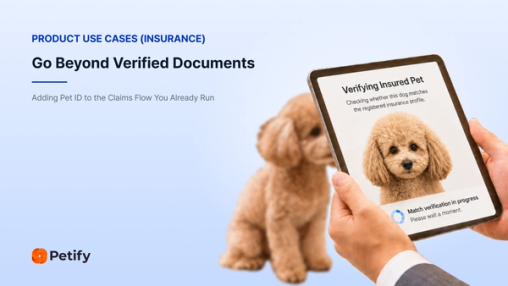
Boarding facilities and dog daycares may need to verify a dog at check-in. If the dog’s nose print was registered at its first visit, staff could scan it again at a later visit to confirm a match.
Start with the task people need to complete, then choose the tools that make it easiest in that setting.
Which Gap Would Another ID Method Close?
An additional identification method is useful when it helps people complete a step they currently cannot.
If people cannot access the tools needed to identify the dog, another route may help.
Suppose a found dog has no readable tag and the finder has no microchip scanner. If the dog’s nose print is registered with a service the finder can use, a supported smartphone may provide another way to identify it.
If the problem is outdated contact information, the record needs updating.
Suppose the dog has already been identified, but the registered phone number no longer works. Another match that returns the same number will leave the finder stuck at the same step.
Before adding another ID method, identify the specific gap it would close. Then check whether your service can support the steps needed to make that route useful.
Four Questions to Make Identification Work in Practice
1. Can people use the identification method when and where they need it?
Check whether a finder can locate the feature and whether staff can use it during a busy check-in. The tool needs to fit the situation in which people will use it.
2. Are the identification details linked to the correct pet and contact information?
Check that the chip number, tag link, or biometric record is connected to the correct pet profile and contact details. Even an accurate scan can lead to the wrong information if the original link was incorrect.
3. Can contact information be kept up to date?
Ask owners to confirm their contact details at booking or check-in, and make updates easy. Explain whether a change in your app also updates the registered animal information registry or requires a separate update.
4. What happens when a check fails?
Give people a next step that addresses the cause. Poor image quality may call for another capture attempt. A missing record may require another identification route. If the owner cannot be reached, a backup contact or staff follow-up may help.
The Real Test: Did the ID Check Lead to the Intended Outcome?
Define the intended outcome for each setting, then measure how often an ID check leads to that outcome.
- For someone who finds a dog: Did they reach the owner?
- For veterinary clinic or animal shelter staff: Did they retrieve the correct registration record for the animal?
- For boarding facility or dog daycare staff: Did they confirm that the arriving dog matched the dog on the booking?
Track these outcomes alongside registration counts and recognition performance. Also record where unsuccessful attempts stop, such as an unreadable tag, an unavailable record, or an outdated phone number.
This helps identify whether an added ID method closes the original gap or whether another step still needs improvement.
Choose each identification method for the gap it closes, and evaluate it by whether the intended outcome is reached.